

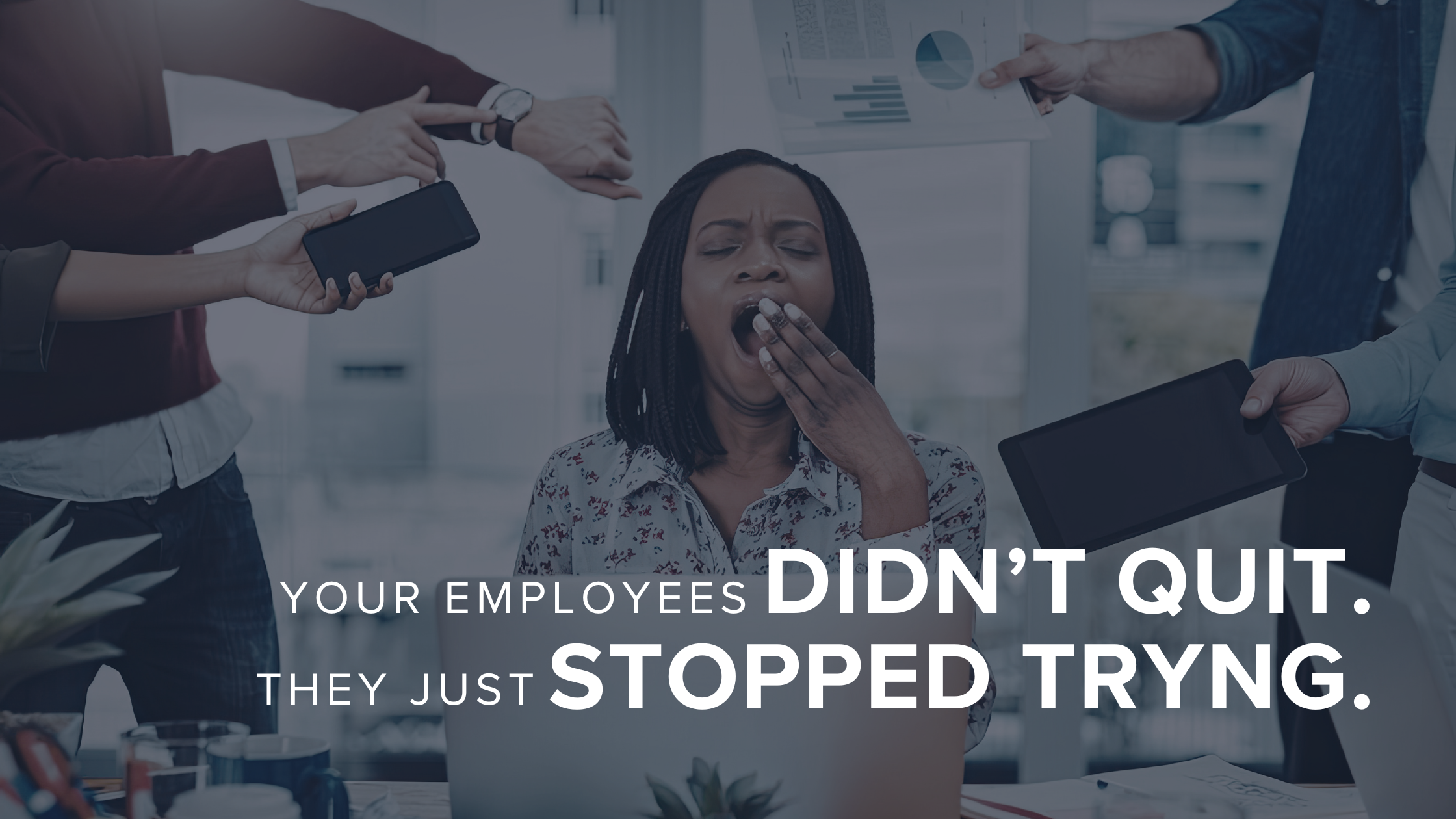

For a while, we called it “quiet quitting.” It gave leaders a clean, convenient label for something that felt messy in practice: people doing just enough to stay employed, but not enough to move anything forward.
The problem is, that label was always a little too tidy for what’s actually happening. What we’re seeing now isn’t a viral buzzword. It’s something far more concrete and far more concerning: a measurable decline in how connected people feel to their work.
Employee Engagement
In Short: Employee engagement isn’t about how busy someone looks or how many hours they log. Instead, it’s about emotional commitment. It’s the difference between doing the work and actually thinking about the work. It’s ownership, attention to outcomes, and a willingness to go beyond what’s required. But right now, most employees aren’t operating from that place.
According to Gallup’s 2026 State of the Global Workplace report, (the most comprehensive annual study of the employee experience in the world), global employee engagement dropped to 20% in 2025. That’s the lowest level since 2020 and the first time Gallup has recorded two consecutive years of decline. To put it differently, 80% of the global workforce is not fully engaged at work.
For leaders responsible for revenue, retention, and performance, that’s not a soft metric. It’s a structural issue.
Why This Matters (Especially Right Now)
Disengagement isn't new, but the trajectory is. Here's what makes the current moment different from any previous dip in engagement research:
- The decline is now two years running. Gallup has never before recorded back-to-back years of falling global engagement. This isn't a blip.
- No region improved. Not a single corner of the world saw engagement rise in 2025. This is a global, systemic pattern.
- The economic cost is staggering. Low engagement costs the world economy an estimated $10 trillion in lost productivity per year. That’s roughly 9% of global GDP!
- Managers are disengaging faster than anyone. Since 2022, manager engagement has dropped nine percentage points. In 2025 alone, it fell five points, from 27% to 22%. Managers have historically been more engaged than the people they lead, but that "engagement premium" is gone.
"Each percentage point of global engagement represents approximately 21 million workers. A three-point drop since 2022 means tens of millions of people have psychologically checked out of their jobs." — Gallup, 2026
The Misconception Most Leaders Get Wrong
When leaders see disengagement, the instinct is often to look at the employee, but Gallup's data challenges that instinct at scale. The research shows that managers account for approximately 70% of the variance in team employee engagement. When engagement drops across entire departments (or entire companies), the root cause is almost never the employees.
The 2026 report makes this painfully clear: while individual contributor engagement has remained relatively flat, manager engagement has collapsed. And when managers aren't engaged, their teams follow.
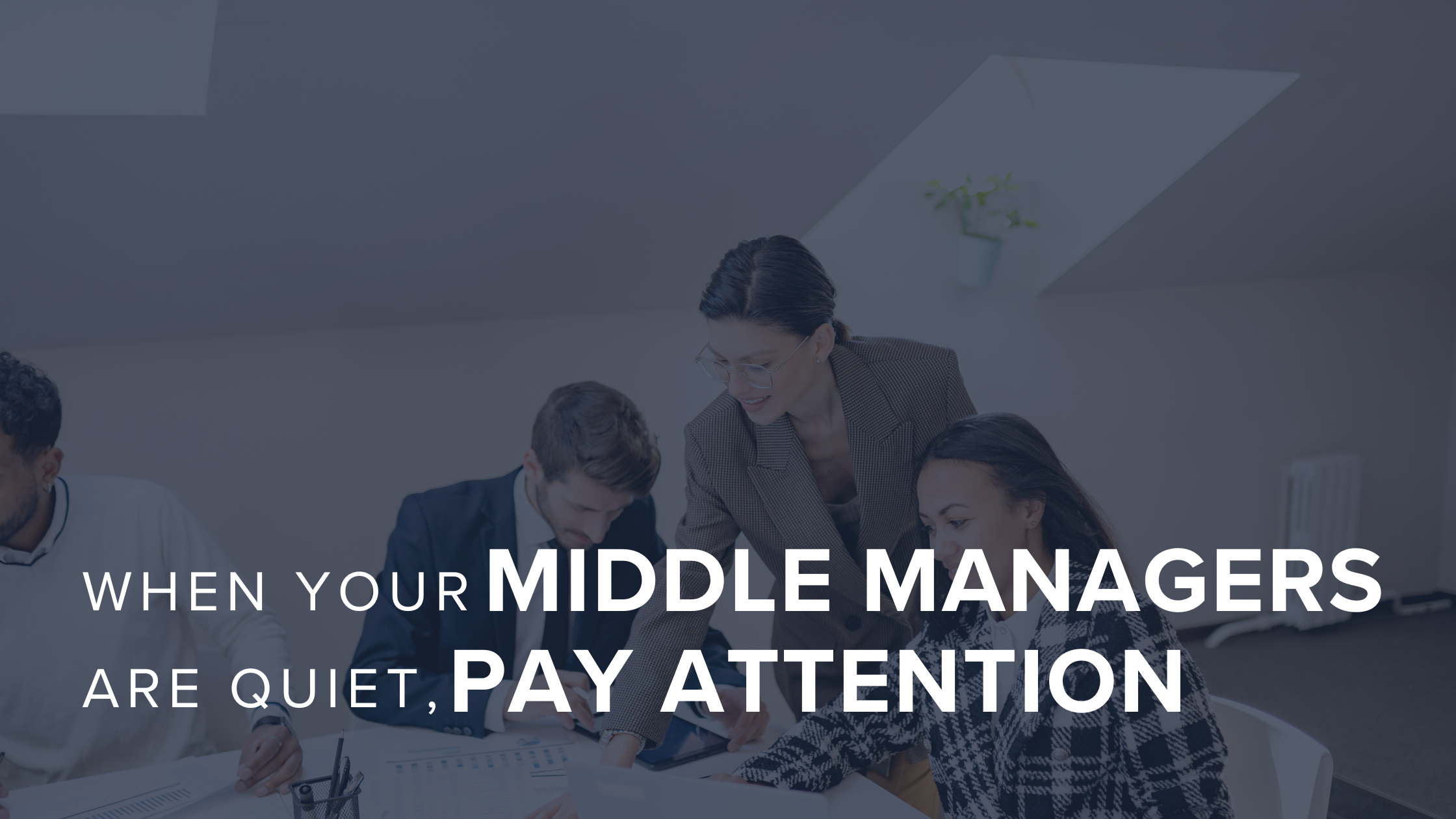
What does a disengaged manager look like in practice? They stop coaching, stop checking in with intention, stop celebrating wins, and stop having hard conversations. They're present on the org chart but absent in the ways that matter. Their teams feel it and respond accordingly.
What Disengagement Looks Like on Your Team
Disengagement doesn't announce itself. It shows up in patterns that are easy to explain away in isolation but much harder to ignore when they start stacking up.
- Activity without intention: work gets done, but there's no real ownership of outcomes. People complete tasks; they don't solve problems.
- Resistance to coaching: not hostile, just checked out. Employees go through the motions in one-on-ones without anything actually landing.
- Declining output quality: work that used to be sharp starts arriving late, incomplete, or just good enough.
- Quiet exodus: top performers leave first because they have options. The disengaged middle stays.
- Normalized mediocrity: standards gradually drift down, and no one pushes back. What was once unacceptable becomes the new baseline.
None of these behaviors scream crisis alone, but together, they erode a team's performance from the inside out. And because the decline is gradual, many leaders don't notice until the numbers make it undeniable.
The Manager Layer Is Where Engagement Is Won or Lost
The most underreported finding in Gallup's 2026 report isn't the decline in employee engagement. It's the collapse in manager engagement.
Since 2022, global manager engagement has fallen from 31% to 22%, a nine-point drop in three years. The 2026 report also notes that young managers (under 35) and female managers have been hit hardest. These are the leaders being asked to absorb constant organizational change, dwindling resources, and shifting expectations without the support they need.
And here's the connection that matters most for performance: best-practice organizations recorded manager engagement of 79%. That’s early four times the global average. Those organizations aren't doing something magical. They're doing something intentional: they're investing in their managers.
What does that investment look like?
- Regular, structured coaching conversations (not just performance reviews, but ongoing development conversations)
- Clear expectations and role clarity, so managers know what good looks like for them, not just their teams
- Peer support and community, so managers aren't carrying challenges alone
- Recognition that manager well-being is a performance variable, not a soft benefit
You can't just train someone and expect them to thrive. You have to develop the environment, which means developing the manager.
What High-Performing Organizations Do Differently
The good news in Gallup's data is that engagement isn't a fixed trait. It's responsive. Organizations that reversed disengagement trends tend to share a few common practices:
1. They treat onboarding and early development as engagement-critical.
New hires form their engagement patterns fast. The first 90 days set the tone for how connected an employee will feel to their role, their manager, and the organization. Leaders who invest in structured onboarding and early coaching see stronger retention, faster ramp time, and higher initial engagement.
2. They develop managers as a strategic priority, not an afterthought.
Gallup's research found that active disengagement among managers is cut in half when they receive real training and development. This means ongoing development with real coaching conversations and peer learning built in.
3. They measure engagement at the team level, not just the org level.
Org-wide engagement scores are too blunt an instrument. High-performing organizations track engagement at the team level so they can identify where the problems actually live and then take action on them.
What to Measure if You're Concerned About Engagement on Your Team
If you're not sure whether disengagement is already affecting your organization, here are the leading indicators worth tracking:
- Voluntary turnover rate, especially among top performers
- Average time-to-productivity for new hires
- One-on-one frequency and quality (are managers actually having coaching conversations?)
- Employee survey scores at the team level, not just company-wide
- Manager engagement scores separately from individual contributor scores
The distinction between manager engagement and employee engagement is critical. Gallup's 2026 data makes clear that these are two different levers. Organizations that conflate them miss the more important intervention.
The Bottom Line
While the numbers in Gallup's 2026 report are an alarm bell, they’re not a death sentence. Engagement declined, but it has recovered in organizations that chose to act.
The leaders who take this seriously right now won't just protect their culture. They'll protect their pipeline, their retention numbers, and ultimately their revenue. With the right conditions, the right coaching, and the right support structure around their managers, employees can re-engage.
Frequently Asked Questions
What is employee disengagement, and how is it different from quiet quitting?
Quiet quitting was a cultural narrative about employees doing the bare minimum. Disengagement is a measurable psychological state: the degree to which an employee is emotionally invested in their work, their team, and their organization. Disengagement encompasses quiet quitting but goes deeper: it includes reduced innovation, weaker customer relationships, higher error rates, and faster attrition.
What does Gallup's 2026 State of the Global Workplace report say about engagement?
Gallup's 2026 report found that global employee engagement fell to 20% in 2025, its lowest level since 2020. This is the first time in Gallup's measurement history that engagement has dropped for two consecutive years. The report also found that 64% of employees are not engaged and 16% are actively disengaged. The economic cost of low engagement is estimated at $10 trillion in lost productivity annually.
Why are managers disengaging faster than employees?
Gallup's research points to the compounding pressures on managers over the past several years (organizational restructuring, digital transformation, hybrid work, and AI adoption) with insufficient support or development. Managers have historically held higher engagement than the teams they lead, but that premium has disappeared. Organizations that are cutting management layers without investing in those who remain are accelerating the problem.
What's the connection between manager engagement and revenue performance?
Directly: engaged managers run better coaching conversations, which leads to faster skill development, higher activity quality, and improved deal conversion. Indirectly: engaged managers retain their top performers longer, which reduces the cost and disruption of attrition. Gallup's long-standing research shows that business units in the top quartile of employee engagement outperform bottom-quartile units by 23% in profitability.
How do you fix a disengagement problem once it's taken hold?
Gallup's data and organizational research consistently point to the same answer: you start with the manager layer. Rebuilding engagement requires structured coaching and development for managers, clarity of expectations, and community. It also requires patience: engagement is built over months, not fixed in a single all-hands meeting.
Not sure where your organization stands right now? Our Quick Culture Assessment takes about two minutes and gives leaders a real snapshot of where their culture currently stands, including a score breakdown that highlights both your strengths and your areas of opportunity. It's a useful first step if you're trying to understand what you're actually working with before deciding where to focus.
Sources: Gallup, State of the Global Workplace: 2026 Report.
https://www.gallup.com/workplace/349484/state-of-the-global-workplace.aspx

Leave a Comment