

"We have annual performance reviews. Isn't that enough?”
Not anymore.
Most organizations believe feedback is part of their culture. Performance reviews happen. Managers complete evaluations. Goals are discussed.
But for many employees, those formal conversations are the only meaningful feedback they receive.
The short answer is this:
Feedback isn't an event. It's a management habit.
The highest-performing cultures don't wait six months (or a year) to help people improve. They build feedback into everyday leadership, creating small moments of coaching that keep employees aligned, engaged, and growing.
The findings from ENGAGE 2026: The Company Culture Report suggest many organizations still have work to do. While leaders often believe feedback is happening, employees are experiencing something very different.
Why Annual Reviews Aren't Actually Feedback
Performance reviews certainly have a purpose.
They're valuable for documenting progress, discussing long-term development, and aligning on future goals. But they were never designed to be an employee's primary source of coaching.
Imagine trying to learn golf by receiving advice only once every December.
Or driving across the country while only checking your GPS every few hundred miles.
Course correction loses its value when it comes too late.
The closer it is to the moment, the more useful it becomes. Employees understand what worked, what didn't, and what they can improve while the experience is still fresh.
Annual reviews summarize the past. Daily feedback shapes the future.
The Feedback Gap Is Larger Than Many Leaders Realize
One of the clearest findings in ENGAGE 2026: The Company Culture Report is that employees simply aren't receiving enough meaningful feedback.
The report found:
- 39% of employees say they don't receive enough feedback from their manager.
- One in four employees receives specific, meaningful feedback at most once a year.
- Only 37% receive meaningful feedback at least once a week, while just 9% receive it daily.
The remaining employees fall somewhere in between - receiving feedback occasionally, but not consistently enough to shape day-to-day performance.
Those numbers point to something bigger than inconsistent coaching. They reveal a clear knowing-doing gap.
Most organizations would likely describe themselves as having a feedback culture. Employees, however, often don't experience one.
That's an important distinction.
A feedback culture isn't defined by whether managers intend to give feedback. It's defined by whether employees regularly receive it.
Why Feedback Matters More Than Ever
Many leaders think of feedback primarily as performance correction. In reality, effective feedback does much more.
According to ENGAGE 2026, ongoing feedback:
- Reinforces strengths.
- Corrects misalignment early.
- Builds confidence.
- Sharpens skills.
- Reduces uncertainty.
Without regular feedback, employees are left guessing.
They may continue working hard, but they don't always know whether they're prioritizing the right behaviors or improving in the right direction.
Over time, uncertainty compounds.
Small issues become larger performance problems simply because nobody addressed them when they were easy to fix.
What Daily Feedback Actually Looks Like
When leaders hear "give more feedback," they sometimes imagine adding another meeting to already full calendars.
That's rarely necessary. The best feedback often happens in moments, not meetings.
It sounds like:
- "The way you handled that client objection was effective because..."
- "Next time, try leading with this question instead."
- "I noticed how you supported your teammate in that meeting. That's exactly the behavior we want to reinforce."
- "Can I give you one suggestion before your next presentation?"
Most of these conversations take less than two minutes.
Individually, they feel small. Collectively, they create clarity, trust, and continuous improvement.
High-performing managers don't save coaching for scheduled reviews. They coach while work is happening.
Feedback Is Also Recognition
One mistake organizations often make is separating feedback from recognition. While feedback is a powerful tool for growth, it’s also a recognition tool - and just as easy for cultures to underinvest in.
- Constructive coaching helps people improve.
- Recognition reinforces the behaviors you want repeated.
ENGAGE 2026 found that 37% of employees do not receive meaningful recognition for a job well done. The report also notes that leaders who provide regular feedback are doing more than offering commentary. They're accelerating growth, reducing uncertainty, and strengthening accountability.
Employees shouldn't have to wonder whether they're succeeding.
Specific recognition answers that question while motivating future performance.
The strongest cultures don't wait for awards ceremonies or quarterly meetings to celebrate great work. They acknowledge it while it's happening.
Building a True Feedback Culture
Creating a feedback culture doesn't require a new performance management platform.
It requires a new management rhythm.
Organizations can start by encouraging managers to:
- Give feedback while work is still fresh.
- Recognize specific behaviors, not just outcomes.
- Make one-on-one conversations developmental instead of purely operational.
- Treat coaching as part of everyday leadership, not a quarterly obligation.
- Ask employees whether they feel coached, not simply whether coaching programs exist.
As ENGAGE 2026 recommends, the most effective feedback is frequent and practical. Don't reserve it for formal reviews. Delivered close to the moment, feedback reinforces strengths, corrects misalignment early, and reduces uncertainty. High-performing teams treat feedback as routine, not reactive.
Feedback Is a Daily Signal of Culture
Culture isn't built during annual reviews. It's built in everyday conversations.
Every piece of timely coaching communicates:
"I'm paying attention."
"Your growth matters."
"We're invested in helping you succeed."
When those conversations happen consistently, employees gain confidence, managers become stronger coaches, and organizations close the gap between the culture they believe they're creating and the one employees actually experience.
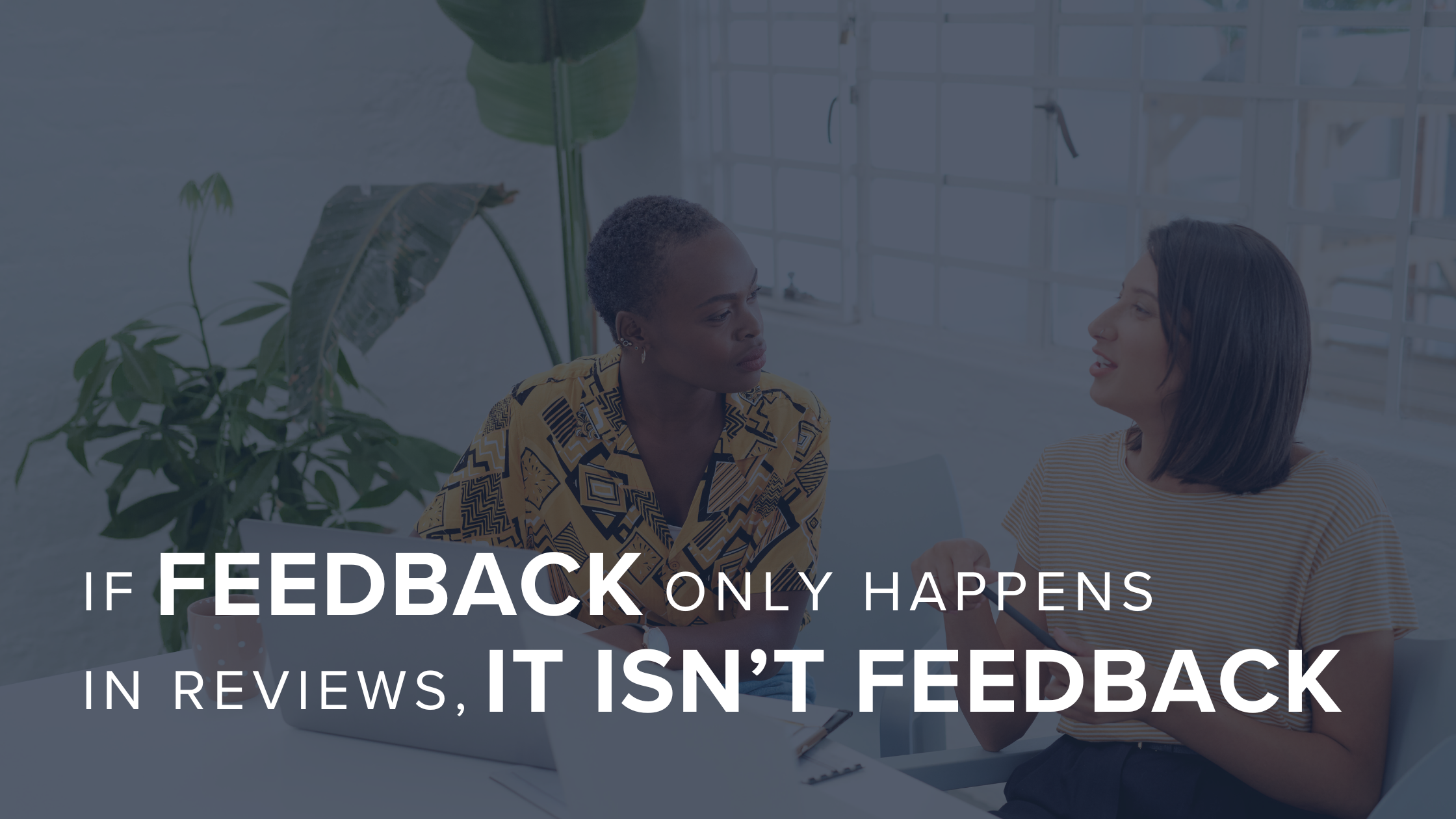
If feedback only happens during performance reviews, it isn't really part of your culture. It's paperwork.
Still have questions about what this looks like day to day? Here's what we hear most often:
Frequently Asked Questions
How often should managers give employees feedback?
Meaningful feedback should happen continuously, not just during annual or quarterly reviews. Even brief coaching conversations throughout the week help reinforce expectations, recognize progress, and address issues before they grow.
What's the difference between feedback and a performance review?
Performance reviews summarize performance over time. Feedback is ongoing, timely coaching that helps employees improve while work is happening. The two complement one another but shouldn't be confused.
Why do employees say they don't receive enough feedback?
Many managers believe they're providing feedback through formal reviews or occasional conversations. Employees often define feedback differently. They value timely, specific coaching that helps them succeed in their day-to-day work.
How can organizations build a stronger feedback culture?
Start by making feedback part of everyday management. Encourage managers to coach in real time, recognize positive behaviors consistently, and use one-on-ones as opportunities for development rather than simply project updates.
Download ENGAGE 2026: The Company Culture Report
Want to see where your organization's feedback culture (and broader employee experience) stands?
Download the ENGAGE 2026: The Company Culture Report to explore the latest research on feedback, recognition, leadership, trust, communication, and employee engagement, along with practical recommendations for building a stronger culture from the inside out.

![[New Data] From Feedback to Recognition: What Employees Really Need](https://uyc.thecenterforsalesstrategy.com/hubfs/UYC_ENGAGE%202025_People%20Development%20Snapshots%20Blog%20Graphic%20(1).png)

Leave a Comment